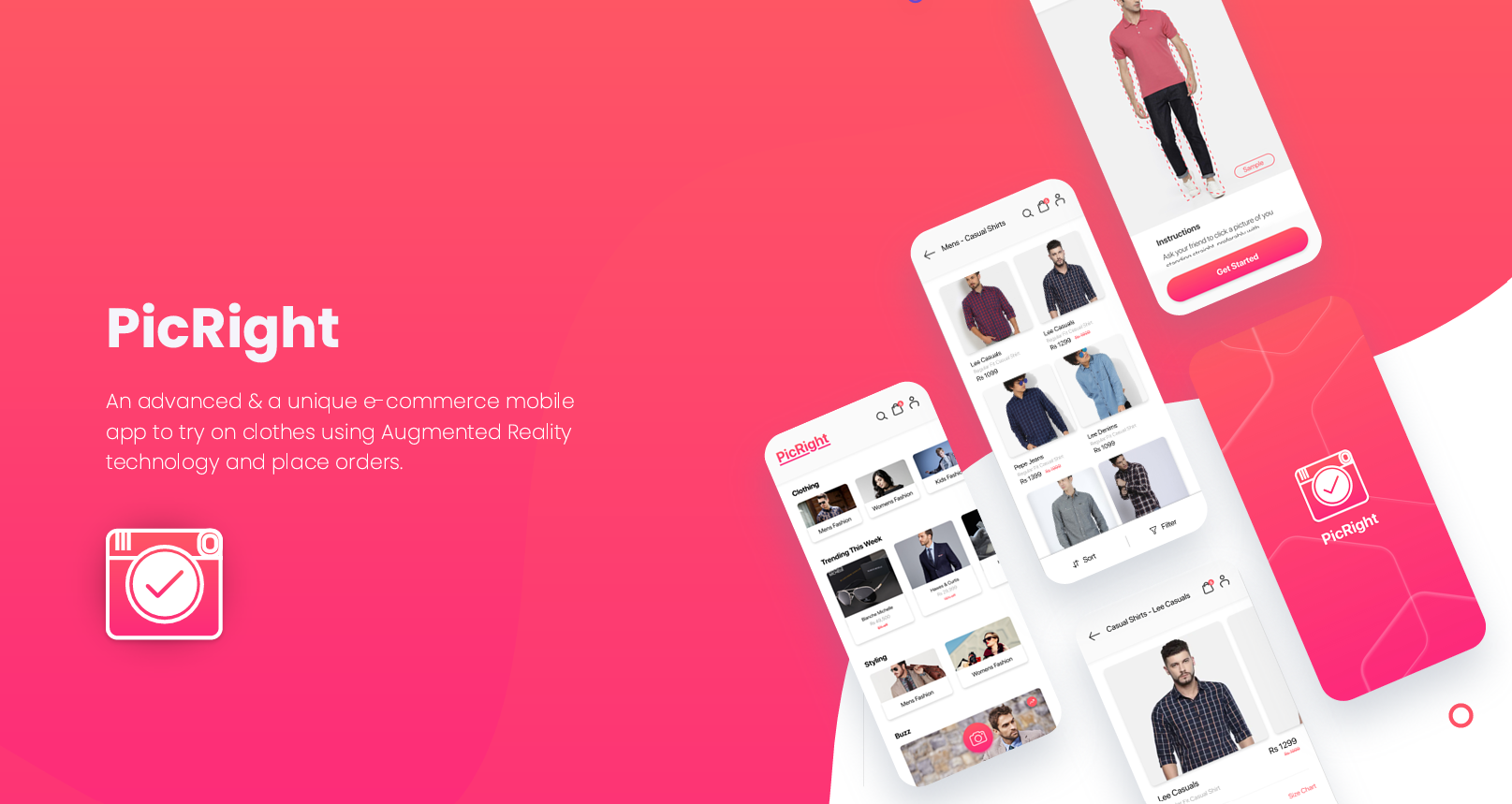
Online fashion shopping has a critical gap: you can browse hundreds of items but you can never truly know how a piece of clothing will look on you until it arrives at your door — and often disappoints. Return rates soar, trust erodes, and purchases go unmade.
The challenge: design a mobile-first e-commerce experience that uses Augmented Reality to let users virtually try on clothes in real time — across different environments — before committing to a purchase. Remove the single biggest barrier between browsing and buying.
Research began by synthesising third-party survey data to frame hypotheses, then validating them through deep qualitative fieldwork with real shoppers — mapping behaviour, frustration, and unmet expectations.
Gathered and synthesised data from third-party surveys to understand the scale of the problem. Key findings: 75% prefer trying on before buying, 80% open to virtual try-on, 68% already shop online but face significant friction at the decision point.
Narrowed down to 45 in-depth interviews to validate survey data and understand the market at a deeper level. In-person observations mapped real user behavior: how they browse, hesitate, abandon carts, and lose confidence at the size and appearance decision.
Analysed leading e-commerce apps — Flipkart, Myntra, Ajio, Amazon, and Snapdeal — evaluating AR capability, try-on features, categorisation, look analysis, and ease of use. All lacked a native virtual try-on experience, validating PicRight's market gap.
Consolidated interview findings into empathy maps and affinity clusters to identify recurring behavioral patterns — users who add to cart but don't buy, who check size guides but remain unsure, and who distrust platform recommendations entirely.
No competitor offered a native AR try-on experience — the single most-requested feature across all user research.
| Platform | AR Try-On | Look Analyser | Categorisation | Ease of Use | Discounts |
|---|---|---|---|---|---|
| Flipkart | ✕ | ✕ | ✓ | ✓ | ✓ |
| Myntra | ✕ | ~ | ✓ | ✓ | ✓ |
| Ajio | ✕ | ✕ | ✓ | ~ | ✓ |
| Amazon | ✕ | ✕ | ✓ | ✓ | ~ |
| Snapdeal | ✕ | ✕ | ~ | ~ | ✓ |
| PicRight | ✓ | ✓ | ✓ | ✓ | ✓ |
Survey data across a broad sample converged on one truth: the inability to try on clothes is the single biggest blocker between browsing and buying online.
Users add clothes to cart but don't complete checkout. The core blocker: they can't be sure how the item will look or fit on their body. Size guides exist but don't resolve the visual uncertainty.
Users want to see how clothes look in different environments and lighting — not just on a model in a studio. The ability to try on in your own surroundings is a key differentiator.
Users distrust online platforms because prior disappointments trained them to hesitate. A hands-on AR experience — even virtual — dramatically increases purchase confidence and platform trust.
"I like to try on virtually. How will this look on me? It would be nicer to see this in different conditions."
Three core pillars shaped the PicRight experience — each directly resolving a friction point from research and mapped to a specific user need.
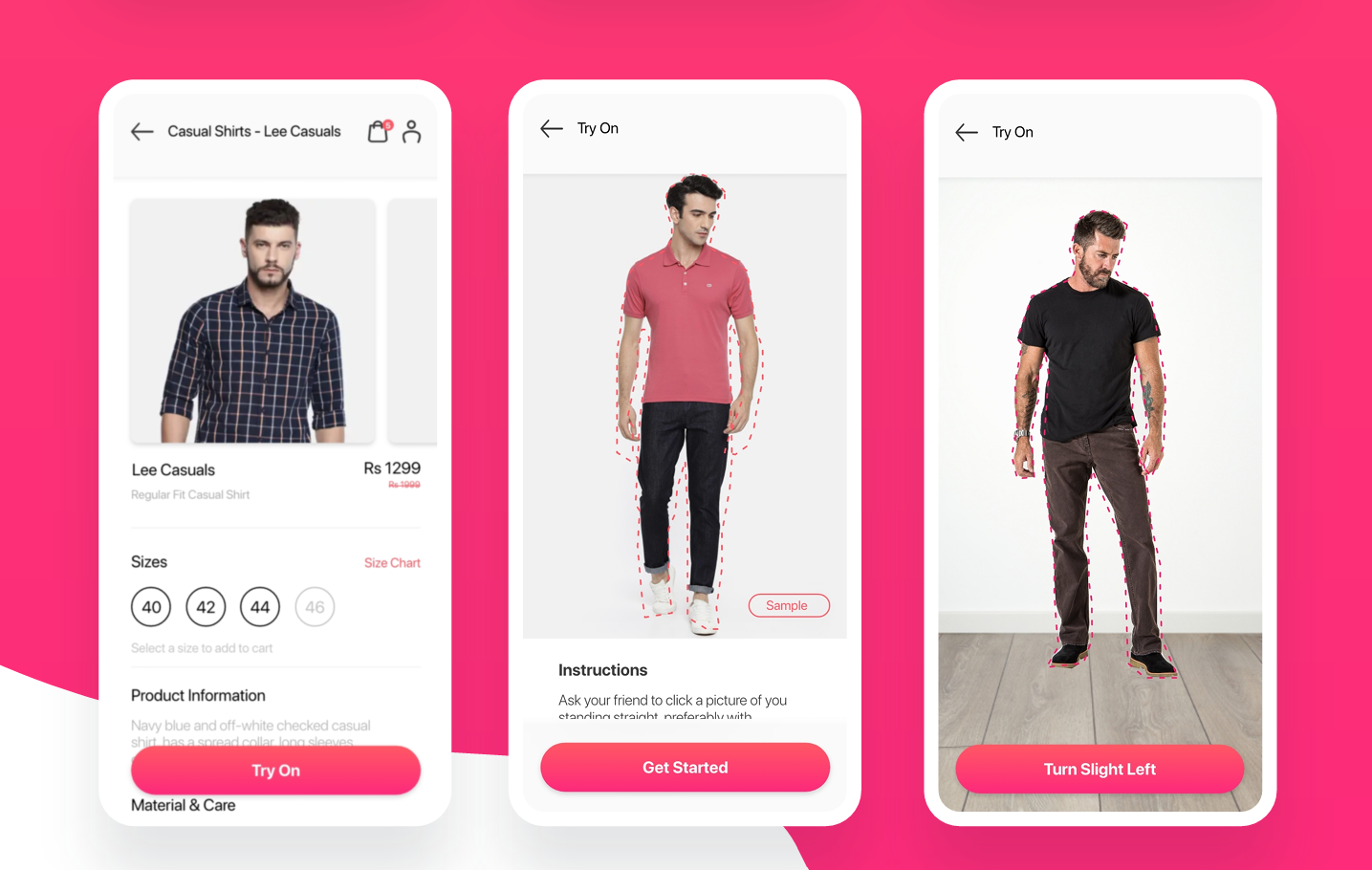
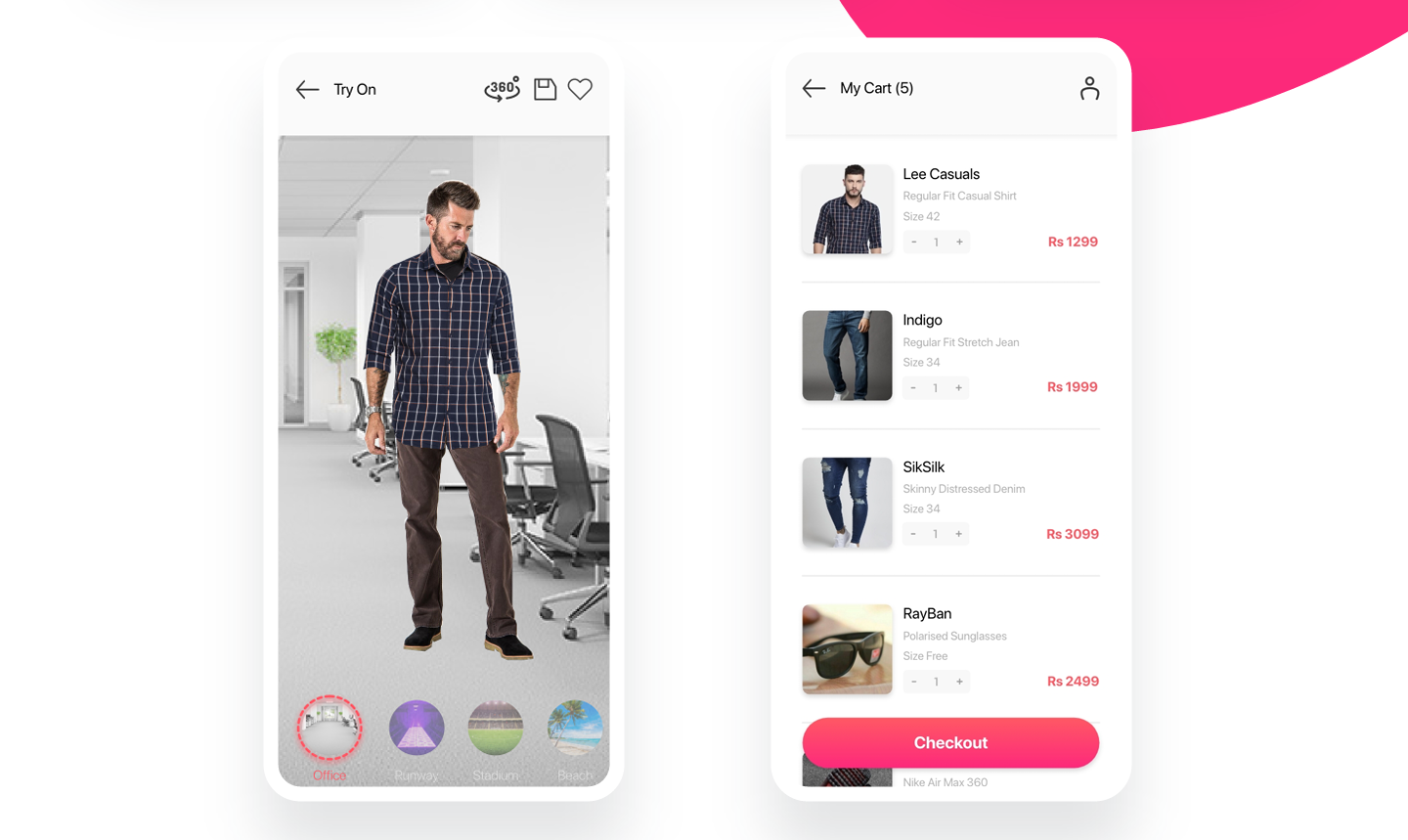
The centrepiece feature: users can select any clothing item and see it overlaid on their live camera feed using Augmented Reality. Switch environments, adjust lighting, and view from multiple angles — all before placing an order.
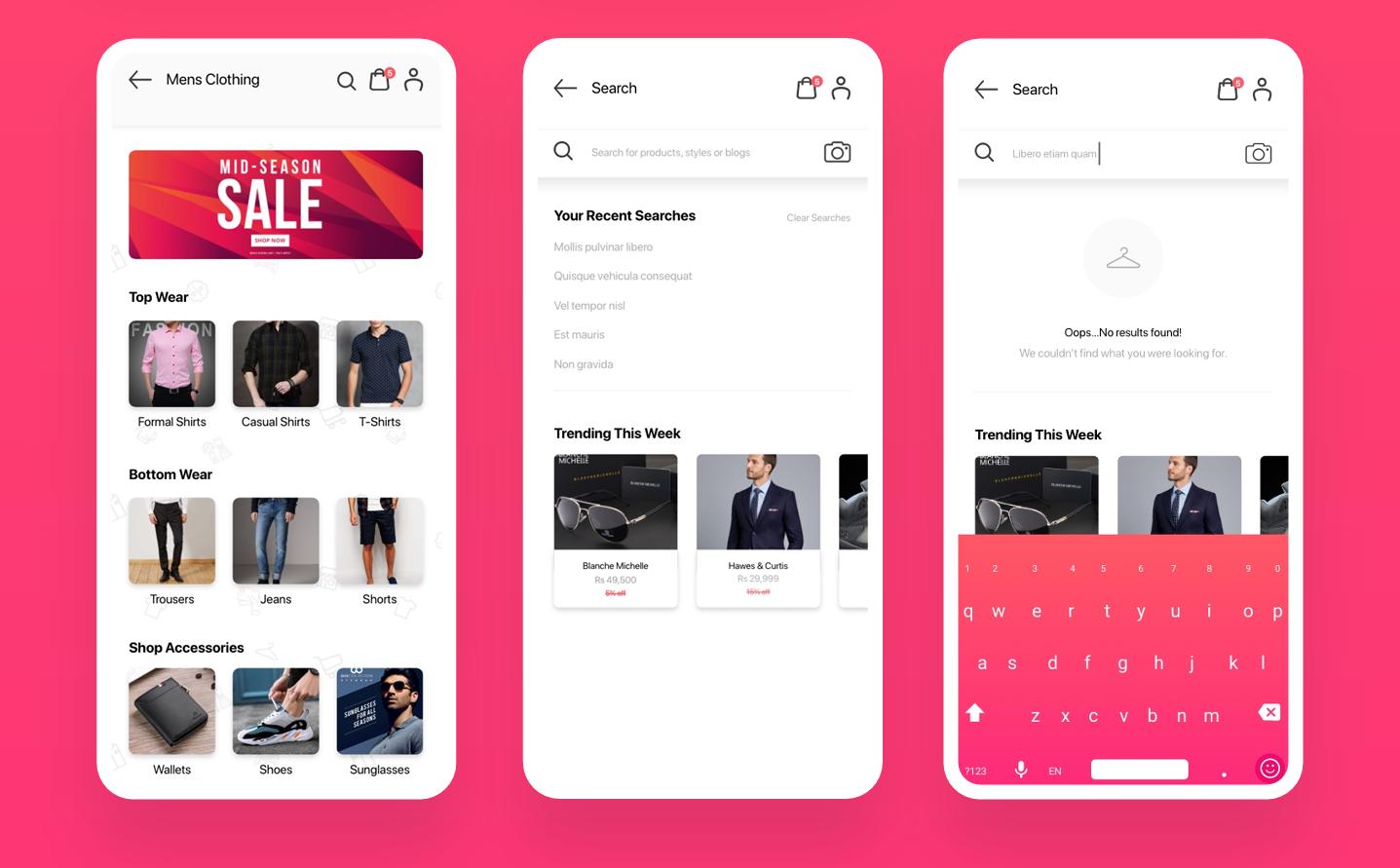
A robust filtering and categorisation system lets users narrow down by style, size, brand, price range, and trending tags — minimising decision fatigue and surfacing relevant items fast.
Streamlined the checkout journey from try-on to order placement in as few steps as possible. Cart, save, bookmark, and order states were consolidated to reduce drop-off and build completion confidence.
Stakeholders wanted an urban look and feel — energetic, youthful, and modern. The palette and typography were selected to signal confidence and movement.
After building the prototype with major flows, I tested with the same participants from the qualitative research phase — running A/B versions of the app alongside user rating for individual flows.
Two versions of key flows — AR try-on initiation and checkout — were tested head-to-head. Users rated each interaction and provided verbal feedback that guided prioritised iterations.
Most users reacted positively to the core flows. The AR try-on feature was universally praised as a step-change from existing apps. Navigation and discovery scored high across both versions.
Two critical improvements emerged: (1) make 360° AR capture easier and more intuitive; (2) ensure non-tech-savvy users face no challenges. Both were actioned in the final prototype iteration.
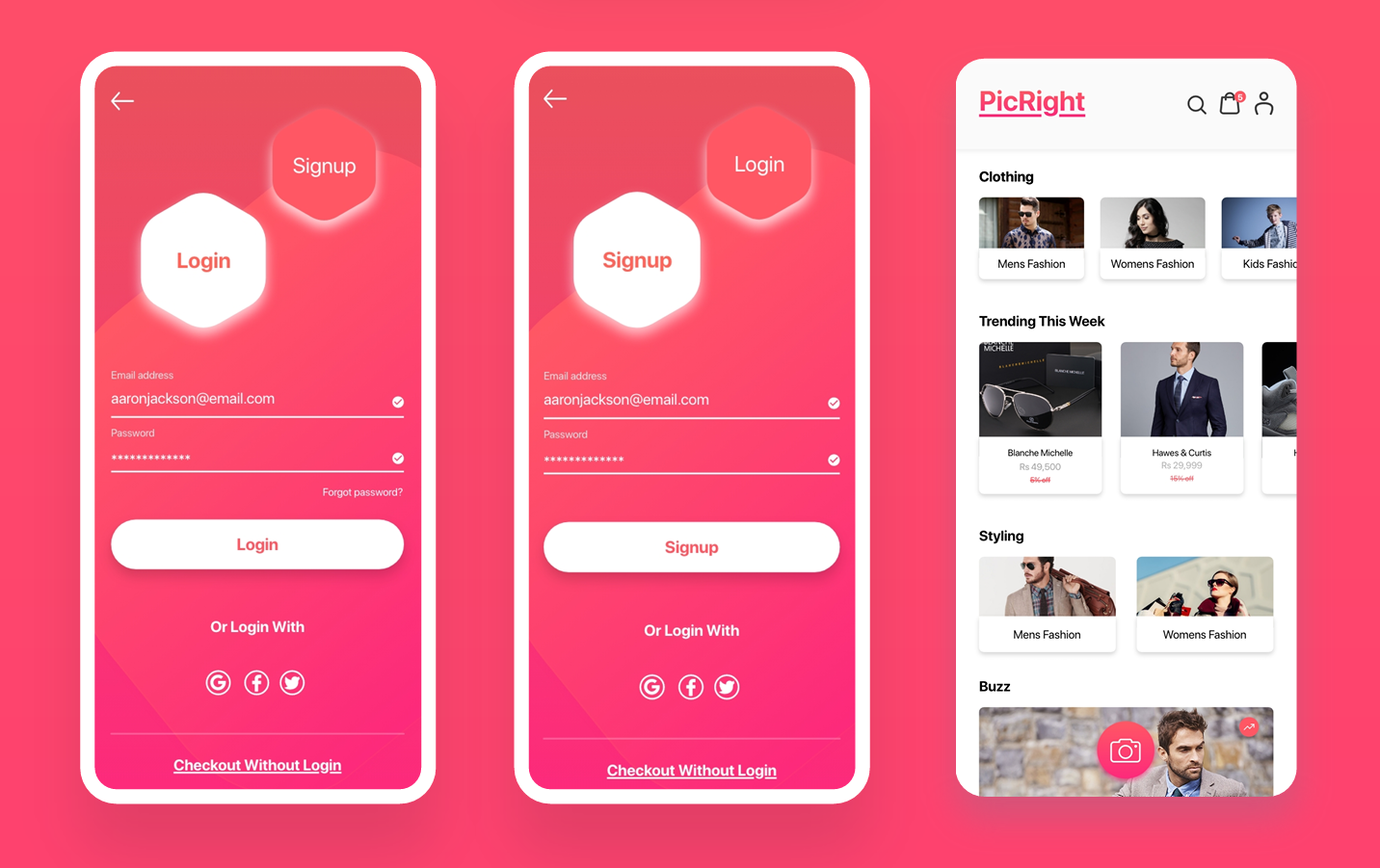
High-fidelity UI screens showcasing the final PicRight experience — from onboarding and product discovery to the core AR virtual try-on flow.
PicRight demonstrated that AR can fundamentally change the e-commerce purchase decision. By designing an experience where users virtually try on clothes in their own environment before buying, we eliminated the single biggest barrier between browsing and checkout — turning hesitation into confidence, and carts into completed orders.