Existing social and communication apps were failing a growing global audience — unable to bridge language gaps, offering generic connection experiences, and lacking tools for professional networking. Users felt disconnected despite being constantly online.
The core challenge: design a mobile-first communication platform that felt both personal and professional, broke down language barriers through intelligent translation, and gave users meaningful control over who they connected with — without sacrificing simplicity or engagement.
Research identified the primary users as the Next-Gen population — digitally native, globally curious, and frustrated by the limitations of existing communication and social apps.
To understand how people connect across cultures and what was failing them in existing apps, I conducted mixed-methods research across 135 participants — combining in-depth interviews, surveys, empathy mapping, affinity mapping, and competitive analysis.
Conducted in-person interviews with 135 participants to uncover frustrations with existing communication apps and map unmet connection needs across cultures and age groups.
Deployed quantitative surveys to validate pain points at scale and identify the most critical feature priorities across the target Next-Gen demographic.
Built empathy maps and affinity diagrams to cluster insights, reveal behavioral patterns, and synthesise research findings into clear, prioritised design opportunities.
Performed competitive analysis of Instagram and LinkedIn to benchmark feature sets, identify gaps, and define where CitizenChat could carve a distinctive and defensible position.
Analysing the two dominant platforms revealed clear gaps — CitizenChat was designed to occupy the space neither could serve.
Research with 135 users surfaced four critical unmet needs — all pointing to a single underlying theme: people want to connect globally but are blocked by language, limited tools, and privacy concerns.
Users desperately want auto-translation built into the core chat experience — not as an afterthought. Language gaps were the #1 reason users felt disconnected from global peers.
Nearly 7 in 10 users sought professional opportunities through social connections. Apps like Instagram lacked this context; LinkedIn lacked the social warmth. CitizenChat needed to bridge both.
Over half of users expressed concern about data privacy. Any new platform needed robust privacy controls, blocking, reporting, and transparent data practices baked in from day one.
Three strategic pillars guided every design decision — each directly mapped to a research-validated user need.
Built AI-powered translation directly into the messaging layer. Messages automatically render in the receiver's preferred language — no manual steps, no friction. The first app of its kind to offer this natively.
Designed a multi-layered filter architecture enabling users to find connections by interest, profession, location, and more — giving people meaningful agency over who they meet.
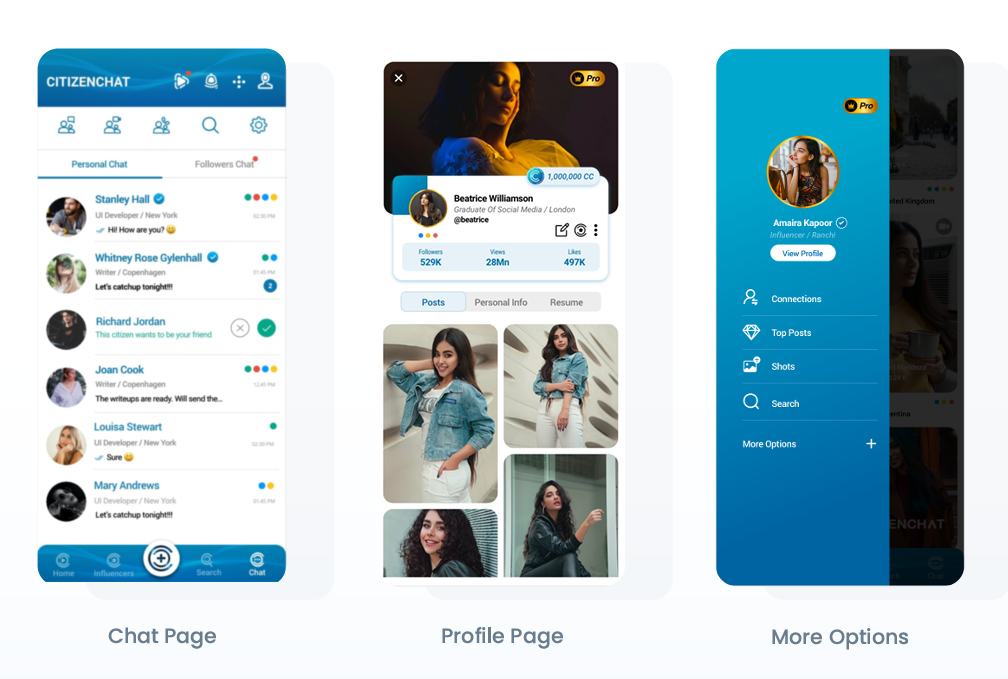
A single profile that serves both personal expression and professional identity. Users can surface creative work, skills, and career context alongside their social presence — bridging Instagram and LinkedIn in one space.
"It would be great if I can find an app which helps me connect with people from around the world and communicate without the language barrier."
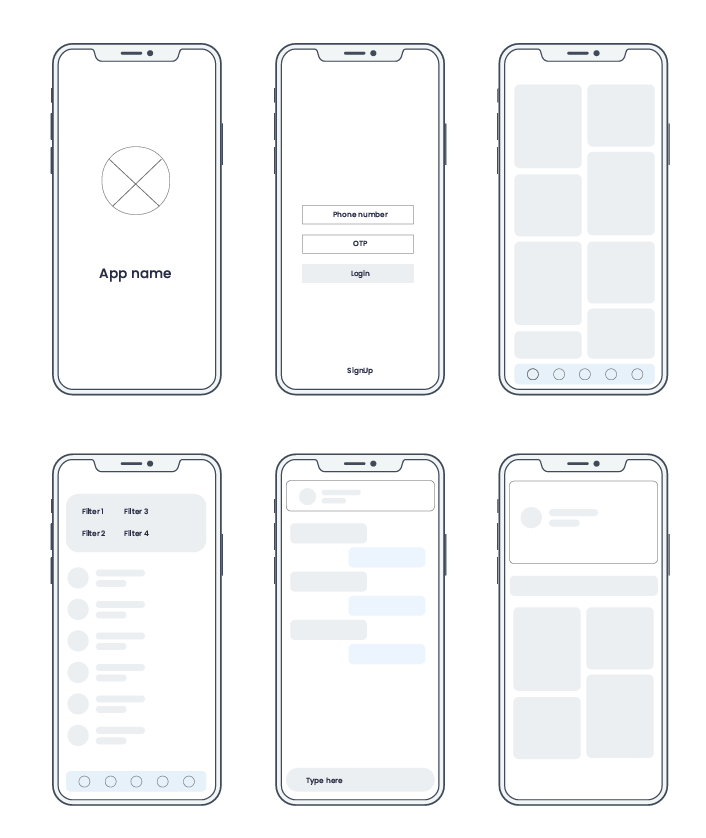
Early-stage wireframes defined the core information architecture and interaction patterns before moving into high-fidelity UI.
Final high-fidelity UI screens showcasing the core interaction flows — from onboarding and discovery to real-time translated messaging.
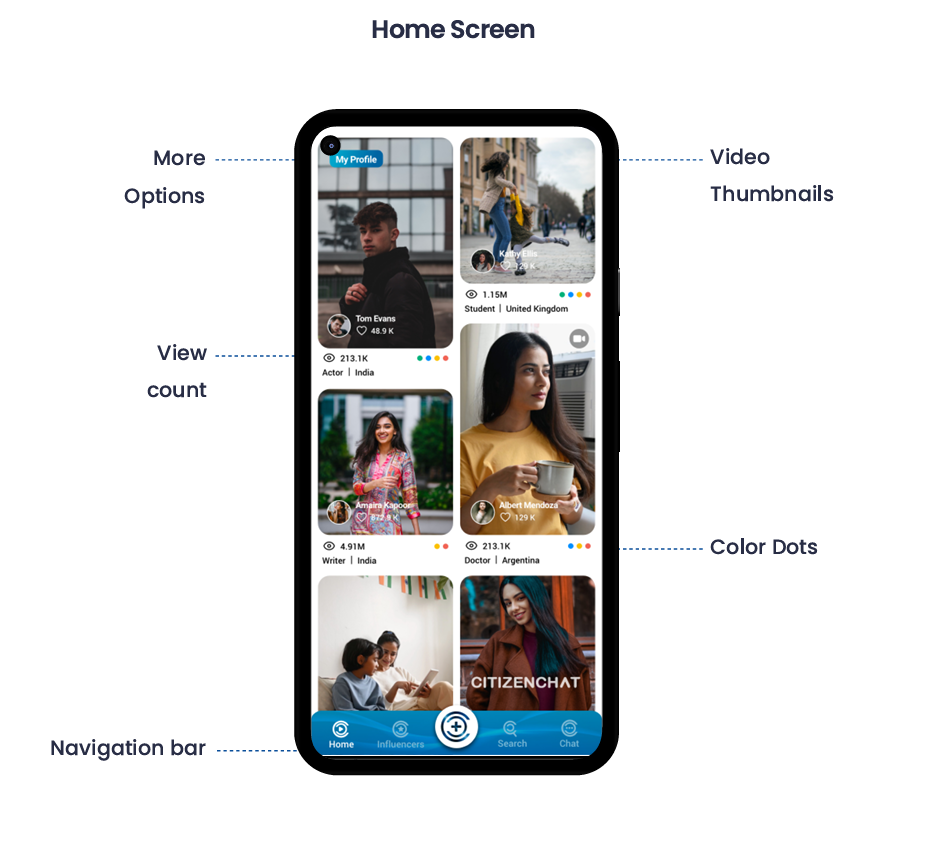
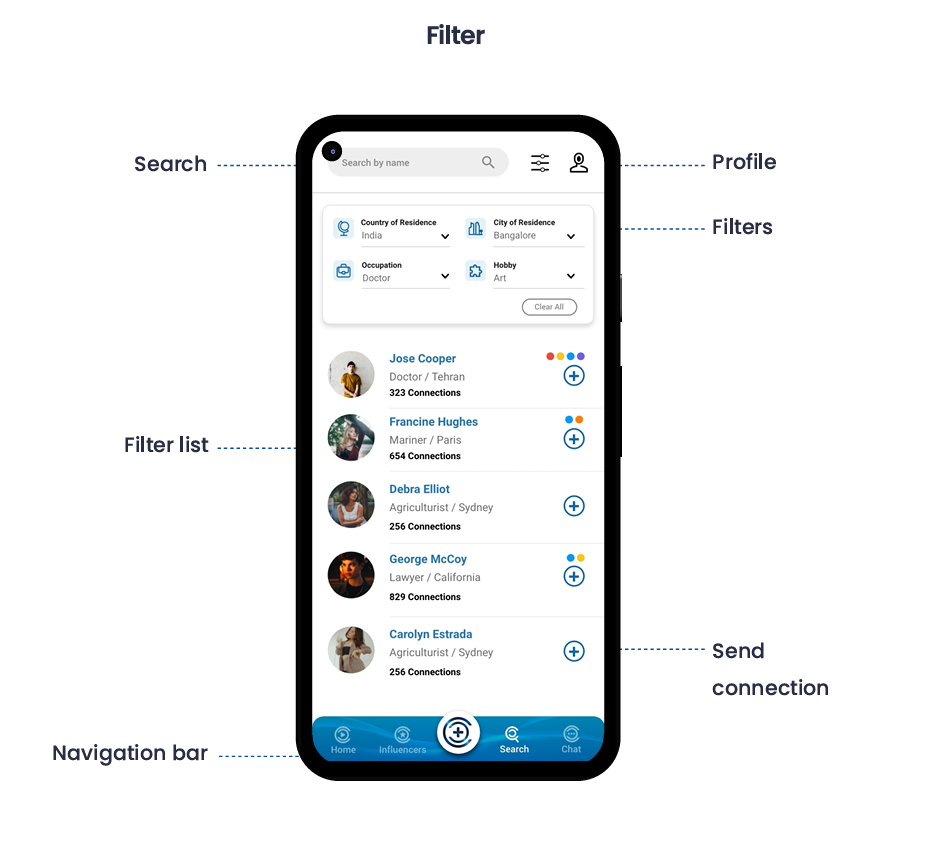
CitizenChat proved that language should never be a barrier to human connection. By designing an experience that seamlessly translated conversations, surfaced professional context, and respected user privacy, we built a platform that 2 million people chose to make part of their daily lives — and that the Economic Times recognised as the Most Innovative App of 2021.